
Il volontariato oncologico: forza trainante dell’oncologia italiana
7 ottobre, h 14:00 in U6 Aula Martini, Piano -1

È in corso una rivoluzione epocale per le Associazioni di volontariato dei pazienti oncologici: non più solo portavoce di bisogni e diritti, ma vere e proprie protagoniste della sanità pubblica. La loro azione abbraccia ogni tappa del percorso di cura: prevenzione, screening, accesso ai farmaci innovativi, riabilitazione, reinserimento sociale e lavorativo e tutela della qualità della vita. Questa transizione verso una partecipazione attiva si realizza nei luoghi chiave del SSN: dalle Reti Oncologiche Regionali ai tavoli del Ministero della Salute, fino ai processi di valutazione dell’innovazione terapeutica di AIFA. Affermandosi nei processi di co-programmazione e ricerca, le Associazioni sono oggi partner strategici indispensabili per la governance dell’oncologia in Italia.
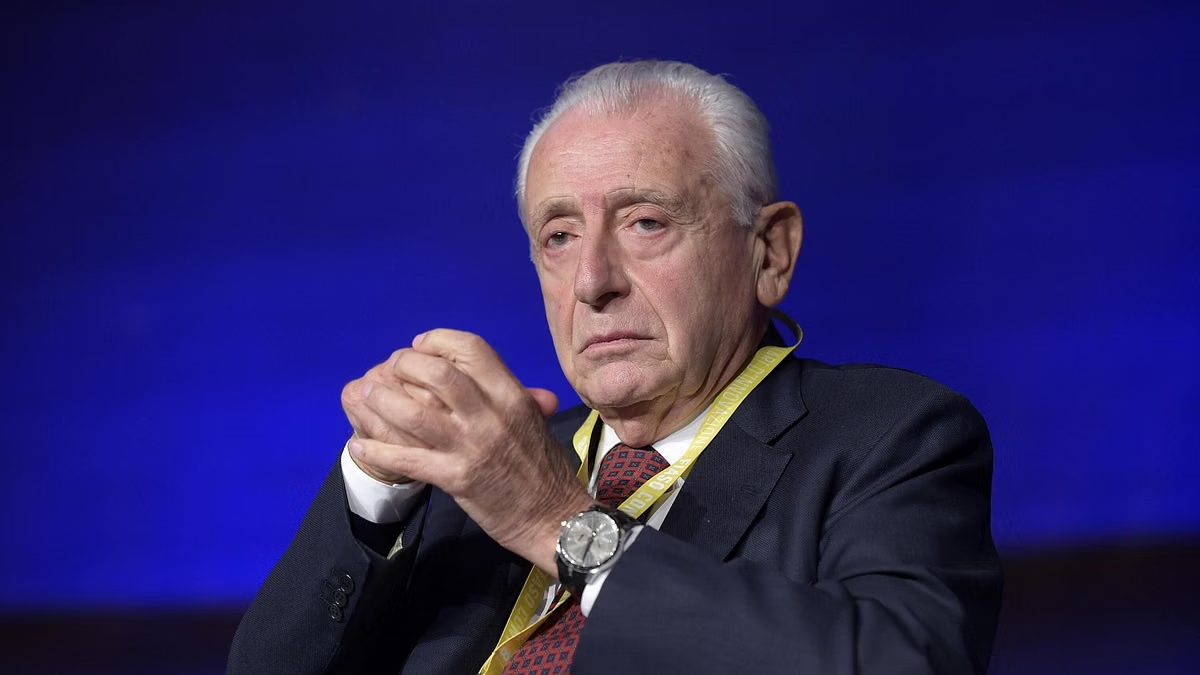
Francesco De Lorenzo – Medico, è stato Professore ordinario di Chimica Biologica presso l’Università di Napoli Federico II. È stato Ministro della Sanità della Repubblica Italiana dal 1989 al 1993 e oggi è particolarmente impegnato nella promozione dei diritti dei pazienti oncologici, come presidente della Federazione Italiana delle Associazioni di Volontariato in Oncologia (FAVO)
Condividi su


Via Bicocca degli Arcimboldi 8, 30126, Milano
Università degli Studi di Milano-Bicocca
Edificio U7 – Civitas
2026 Empirical Health Economics Workshop
The 9th edition of the EHEW workshop will focus on evaluations of current or past health policies and on analyses which shed light on important health policy questions.
The University of Milano-Bicocca, Brunel University London, Ca’ Foscari University of Venice, and ALTEMS – Alta Scuola di Economia e Management dei Sistemi Sanitari dell’Università Cattolica del Sacro Cuore are happy to announce the IX Empirical Health Economics Workshop (EHEW 2026).
Hosted by: University of Milan-Bicocca
Dates: 9th – 10th – 11th of July 2026
Venue: University of Milan-Bicocca, U6 Building, Piazza dell’Ateneo Nuovo 1, 20126, Milan.
Programme
The workshop will consist of plenary sessions only. Plenary sessions will host keynote speakers along with the presentation of selected papers submitted through the call for papers. Click here to see the PROGRAM.
Social Events
Consult here the SOCIAL EVENTS we prepared for you.
Keynote speakers
• GIUSEPPE ARBIA | Catholic University of the Sacred Heart, Rome
• BADI H. BALTAGI | Syracuse University, University of Leicester
• JOHN MULLAHY | University of Wisconsin
• IRENE PAPANICOLAS | Brown University
Objectives
The workshop welcomes research empirical (applied econometrics) papers that evaluate current or past health policies;
undertake analyses that shed light on important health policy questions.
Important dates
Paper submissions: from 7 January 2026 to 31 March 2026.
Acceptance decision: 30 April 2026. Authors of accepted papers need to register by 12 June 2026 to confirm participation.
Fees: 500 euros
Registration for resident in Italy: LINK
Registration for non-residents in Italy: LINK
Programme: available soon
Scientific Committee
• John Mullahy, University of Wisconsin – Chair
• Giuseppe Arbia, Catholic University of the Sacred Heart, Rome
• Badi H. Baltagi, Syracuse University and University of Leicester
• Paolo Berta, University of Milano-Bicocca
• Agar Brugiavini, Ca’ Foscari University of Venice
• Cinzia Di Novi, University of Pavia
• Simone Ghislandi, Bocconi University of Milan
• Andrew Jones, University of York
• Francesco Moscone, Brunel University London and Ca’ Foscari University of Venice
• Catia Nicodemo, University of Oxford and Brunel University London
• Irene Papanicolas, Brown University
• Giacomo Pasini, Ca’ Foscari University of Venice
• Luigi Siciliani, University of York
• Rita Santos, University of York
• Elisa Tosetti, University of Padua
• Giorgio Vittadini, University of Milano-Bicocca
Accommodation
Suggested_Hotels_Milan
Journal special Issue
The conference organisers, in collaboration with the editors of the journal Social Science and Medicine, will invite the authors of submitted papers to present their manuscript to the journal. The editors will ensure that the papers undergo the normal review process on a fast-track basis, in liaison with the conference organisers. Details for participating in the Special Issue will be sent at the end of the workshop.
Via Bicocca degli Arcimboldi 8, 30126, Milano
Università degli Studi di Milano-Bicocca
Edificio U7 – Civitas
Unblocking writing: Effective and Efficient
Knowledge Transfer « Publish and Flourish»
10 giugno, h 10:30 in U7-4057
con Linda Pagani– Professor at the School of Psycho-Education of the Faculty of Arts and Sciences at the Université de Montréal
FOR PHD & YOUNG RESEARCHERS
Part 1. Stable mind – Healthy existence – Realizing one’s potential.
Part 2. Efficiently academic story-telling
in the form of a paper that can be written in 5 days.
Part 3. Effective knowledge transfer, from the first submission/rejections and resubmission, to then getting it on the news and dealing with journalists.
Part 4. Advice on easy paper production in
academic yet reader-friendly English, for people whose first language is not English.

Condividi su
Via Bicocca degli Arcimboldi 8, 30126, Milano
Università degli Studi di Milano-Bicocca
Edificio U7 – Civitas
Childhood, Family and the Future:
Evidence‑Based Insights for a Healthy 21-st
Century Lifestyle During the Early Years
10 giugno, h 09:30 in U7-4057
con Linda Pagani – Professor at the School of Psycho-Education of the Faculty of Arts and Sciences at the Université de Montréal
Join Linda S. Pagani as she traces more than three decades of scientific inquiry into human development and family environments. Drawing on a rich body of prospective‑longitudinal research, Professor Pagani will offer a powerful and integrative perspective on what truly shapes children’s trajectories, and how these insights illuminate the foundations of a healthy and meaningful lifestyle in the 21st century. Her visit and conference will weave together empirical evidence, developmental theory, and reflections on contemporary challenges to propose a clear, research‑grounded vision of “what matters most” for human flourishing in our modern world. This is a rare opportunity to hear a leading scholar and clinician synthesize a lifetime of work into a forward‑looking conceptual framework that speaks directly to those concerned with population health and deeply invested in the well‑being of future generations.
Condividi su
Via Bicocca degli Arcimboldi 8, 30126, Milano
Università degli Studi di Milano-Bicocca
Edificio U7 – Civitas
The Spatial Equilibrium Effects of Hospital Closures
8 maggio, h 12:00 in U6-01b
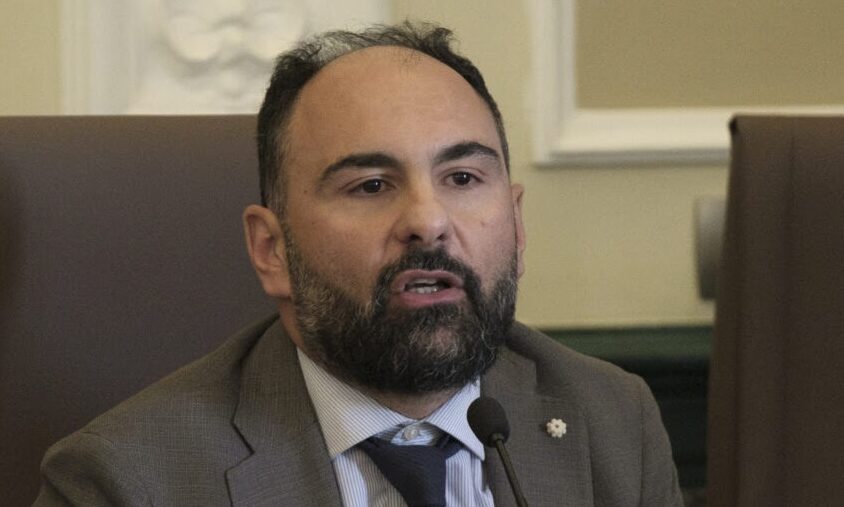
con Vincenzo Carrieri, Professore Ordinario di Scienza delle Finanze & Direttore del Centro Studi su Società, Salute e Territorio, Università della Calabria
Over the past two decades, cost containment has become a central objective of public policy in advanced economies, often targeting locally provided public services such as hospitals. This paper studies how hospital department closures triggered by post-crisis reforms in Italy reshape healthcare provision and generate broader place-based effects. Using highly granular ward-level data for the universe of Italian public hospitals (2015–2022), we exploit staggered variation in closures and implement a difference-in-differences design. We show that closures act as localized supply shocks, increasing activity volumes and congestion in neighboring same-specialty departments, with selective deteriorations in quality. Extending the analysis to municipalities, we document reductions in natality, increases in mortality, and declines in per-capita income and income distribution indicators in areas exposed to closures. The findings highlight non-trivial efficiency–equity trade-offs and underscore the importance of accounting for spatial equilibrium and place-based effects when evaluating hospital downsizing policies.
Condividi su
Via Bicocca degli Arcimboldi 8, 30126, Milano
Università degli Studi di Milano-Bicocca
Edificio U7 – Civitas
Shaping Soft Drinks:
Sugar Taxes, Consumption, and Reformulation in Europe
25 maggio, h 14:30 in U6-18
con Cinzia di Novi, Professor in Public Economics at University of Pavia and President of the Italian Health Economics Association (AIES)
Sugar-sweetened beverages are a major source of free sugars in Western diets. In response, several European countries have introduced taxes to encourage product reformulation and reduce consumption. This study assesses how these taxes affected sales in off-trade and on-trade markets, examines consumers’ potential substitution effects using Euromonitor data (2004–2019), and evaluates manufacturers’ reformulation responses through Mintel product-launch data (2010–2019). We focus on six countries that implemented such taxes, specifically Belgium, France, Hungary, Ireland, Portugal, and the United Kingdom, and additionally analyse Denmark, which introduced a similar tax earlier and repealed it in 2014, providing a reverse test case. Using a synthetic control approach, we construct counterfactual scenarios to estimate tax impacts. We find significant sales effects only under progressive tax designs, while reformulation emerged consistently, particularly where sugar thresholds and implementation timelines were clearly defined.

Condividi su
Via Bicocca degli Arcimboldi 8, 30126, Milano
Università degli Studi di Milano-Bicocca
Edificio U7 – Civitas
Universalismo ed Equità del SSN: la promozione della longevity
II Convegno Annuale BReCHS – giovedì 4 giugno 2026
A partire dalle 9.00 presso l’Università degli Studi di Milano-Bicocca, Aula Sironi
I sistemi sanitari occidentali stanno affrontando sfide strutturali che mettono a dura prova la loro sostenibilità, con pressioni crescenti legate a cambiamenti demografici, epidemiologici e tecnologici. In Europa, la percentuale di persone ultra-sessantacinquenni ha superato il 20%, con stime che prevedono un incremento oltre al 30% entro il 2050 (Eurostat, 2020).
Questo fenomeno trasforma radicalmente la domanda di servizi sanitari.
Parallelamente, la spesa sanitaria complessiva in molti Paesi europei è cresciuta a ritmi superiori all’aumento del PIL, raggiungendo in media il 9% del prodotto interno lordo (OECD, 2021).
Questo contesto di crescente domanda e costi elevati mette in discussione i fondamenti del Sistema Sanitario in particolare l’universalismo e l’equità.
L’incontro si propone di esplorare e discutere:
– L’impatto dei cambiamenti demografici sulla sostenibilità del sistema sanitario.
– La promozione della longevity come attenzione non solo al prolungamento dell’aspettativa di vita, ma di una vita anziana in salute.
– Possibili soluzioni e strategie per garantire i principi fondanti del sistema sanitario.
Il Convegno ospiterà nello spazio antistante all’Aula Sironi, in Galleria della Scienza, una sessione di poster di giovani ricercatori. Nel pomeriggio avverrà la premiazione del best poster per ogni area tematica.

Condividi su
Via Bicocca degli Arcimboldi 8, 30126, Milano
Università degli Studi di Milano-Bicocca
Edificio U7 – Civitas
April 15 2026, h 14:30
Seminar Room U7-4057
with Andrea Rotnitzky – Professor at the Department of Biostatistics, University of Washington and Recipient of 2022 Rousseeuw Prize for Statistics
The paper focuses on proximal causal inference, a framework that allows researchers to estimate causal effects even when some important confounders are unmeasured, by using observed proxy variables. Traditionally, this approach has been applied to settings with fixed treatments or interventions based on baseline characteristics.
This work extends the framework to more complex situations with continuous treatments, specifically considering scenarios where each individual’s observed treatment is systematically modified (known as modified treatment regimes).
The main contributions are:
– proposing a flexible method that does not require all confounders to be measured;
– using modern debiased machine learning techniques to avoid strong parametric assumptions.
The methodology is motivated by studies on COVID-19 vaccines, where key factors like an individual’s immune capacity are not directly observed. The approach is validated using real data and simulation studies.

Condividi su
Via Bicocca degli Arcimboldi 8, 30126, Milano
Università degli Studi di Milano-Bicocca
Edificio U7 – Civitas
with Prof. Saverio Strages from Western University in Canada
The seminar will provide an overview on the relevance of sleep health as a major but still neglected public health priority globally. Dr. Stranges will present some of his epidemiological work from population-based studies on the link between sleep problems and chronic disease risk, with emphasis on social determinants of health and disparities in the distribution of the disease burden associated with poor sleep patterns.

Condividi su
Via Bicocca degli Arcimboldi 8, 30126, Milano
Università degli Studi di Milano-Bicocca
Edificio U7 – Civitas
Economic Fallout of Social Conflict:
Evidence from Social Media and Satellite Images
SEMINARIO 18 DICEMBRE 2025
In this paper, we leverage a quasi-experimental design and innovative sources of information to examine the impact of rising social conflict and political instability in Haiti.
By exploiting geographical heterogeneity and leveraging data from Facebook and satellite imagery, we show the impact of different types of violence on proxies of economic activity in the context of countries with limited data availability. In the short term, we find that one additional violent event reduces economic activity by approximately 10% within the ten-day window following its occurrence. In the medium term, one additional violent event is associated with a decline of approximately 2.7% in economic activity over the subsequent five-month period. Importantly, the Facebook data also allows for a disaggregation of the effects by sector, with the sectors most impacted by rising insecurity being business and utility services, home services and professional services.
The long-term estimates indicate that an additional violent event is associated with a 2.3% decline in economic activity, as proxied by nighttime light intensity, one year following the event. These results show a sharp initial decline in economic activity, followed by smaller but lasting contractions, indicating limited recovery after violent events.

Condividi su
Via Bicocca degli Arcimboldi 8, 30126, Milano
Università degli Studi di Milano-Bicocca
Edificio U7 – Civitas